Win a Breathtaking Bryson City Giveaway
Find the 40 best spots for bird watching in the Asheville area of the Blue Ridge and Great Smoky Mountains. If you are into birding, our many protected forests and parks are especially great places to be! These are all stops on the North Carolina Birding Trail. Thanks to Malorey Henderson for compiling this list!
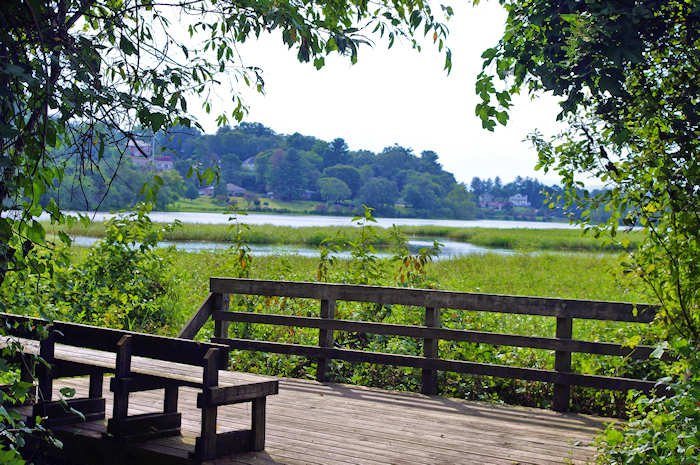
Beaver Lake Bird Sanctuary (photo above)
This 10-acre Sanctuary on the north side of Asheville (just a few miles from downtown) is managed by the Elisha Mitchell Audubon Society. The sanctuary attracts waterfowl especially after storms, migrating species in spring and fall, and a nice array of breeding birds. Yellow Warbler, Gray Catbird and Blue-gray Gnatcatcher can be found from spring through fall. Great Blue Heron can be also seen regularly, and Green Heron have nested here in recent years. Three species of swallow and Chimney Swift are frequently seen over the lake. From the parking lot, a path leads around the small pond (an eco-filter pond designed to trap sediments before they flow into the lake) to a boardwalk loop that includes lake overlooks. Leaving the sanctuary, birders will also want to take the sidewalk northwest to a trail that leads along the lake edge. In season, both Baltimore and Orchard Orioles can be found here, along with Eastern Kingbird and, with luck, Warbling Vireo. In recent years, Brown-headed Nuthatch have nested in cavities in the pine trees. It's usually worthwhile to walk the full length of the lake.
Habitat: Oak forest & mixed hardwoods/pine, early successional, bog/wetland, lake
Species of Interest: Warbling Vireo, Brown-headed Nuthatch, American Redstart, Yellow Warbler, Baltimore Oriole, assorted wintering waterfowl
North Carolina Arboretum
The North Carolina Arboretum is a 434-acre public garden located in the Bent Creek Experimental Forest of the Pisgah National Forest. Stop at the Baker Exhibit Center when you first arrive at the Arboretum to find out about daily programs and to pick up a Trail and Gardens Map, exhibit brochure, and a list of the Birds of the North Carolina Arboretum. From the Baker Exhibit Center, walk through the many Arboretum garden exhibits. The Stream Garden represents a western North Carolina mountain stream and plant communities associated with these habitats; this area often attracts a variety of birds. The Arboretum's Nature Garden Trail and National Native Azalea Repository are other good places to visit. The spring and fall months offer great opportunities to see a variety of migrating species passing through on their way to or from their breeding grounds to the north. The Arboretum is also a model for sustainable practices, including green building design, sustainable landscaping, rain gardens, water conservation, and alternate energy technology.
Habitat: Northern hardwood/cove forest, oak forest & mixed hardwoods/pine, early successional, river/stream
Species of Interest: Yellow-bellied Sapsucker, Blue-headed Vireo, Black-throated Green Warbler, American Redstart
Craggy Gardens
The mix of hardwood forest, mountain bald, and spruce/fir forest along this section of the Blue Ridge Parkway is home to a variety of breeding songbirds from May through September. At Milepost 367.6 turn onto the road leading to the Craggy Gardens picnic area. Walk along the road from the Parkway to the roundabout and watch for Veery, Winter Wren, Blue-headed Vireo, Rose-breasted Grosbeak, Black-throated Blue, Black-throated Green, Blackburnian, Chestnut-sided, and Canada Warblers. In fall, this road is usually a great place to see migrating songbirds such as Cape May, Tennessee, Bay-breasted, and Palm Warblers. At the roundabout, follow the Mountains-to-Sea Trail or the trail to Snowball Mountain and watch for Red-breasted Nuthatch, Brown Creeper, and Common Raven. Continue driving north on the Blue Ridge Parkway to the Craggy Visitor Center at Milepost 364.5. From the Visitor Center, follow the Craggy Gardens Trail through the heath bald to the Craggy Gardens picnic area. Chestnut-sided, Black-throated Blue and Canada Warblers are all common. Veery and Hermit Thrush can also be heard along the trail. Watch for Broad-winged Hawk and Common Raven overhead. During the fall migration, Sharp-shinned Hawk can be seen hunting for songbirds.
Habitat: hardwood forest, mountain bald, spruce-fir forest
Species of Interest: Common Raven, Brown Creeper, Black-throated Green Warbler, Blackburnian Warbler, Canada Warbler, Chestnut-sided Warbler, Black-throated Blue Warbler, Tennessee Warbler, Cape May Warbler, Rose-breasted Grosbeak
Bull Creek, Blue Ridge Parkway
This Audubon Important Bird Area (IBA) on the Blue Ridge Parkway is one of the best mid-elevation places to bird near Asheville. During the breeding season, birders can easily find many species of songbirds along this corridor. As spring progresses, though, traffic and noise picks up, so arrive early in the day for a pleasant birding experience. Tanbark Ridge (Milepost 376.7), Bull Creek Valley (Milepost 373.8), and Lane Pinnacle (Milepost 372.1) Overlooks are the safest places to park and bird, and all allow eye-level birding. Other vistas are accessible on foot, and provide equally good views at canopy species such as Blackburnian Warblers, Rose-breasted Grosbeak and Scarlet Tanager. Bull creek is also home to one of North Carolina’s most significant populations of Cerulean Warblers. The Mountains-to-Sea (MTS) Trail that parallels the Parkway from Craven Gap (Milepost 377.4) to north of the Weaverville exit (Milepost 375.5) offers a more intimate experience. It can be accessed at Craven Gap and from Ox Creek Road (SR 2109), about 200 yards off of the Weaverville exit (though the latter access is poorly signed). If you follow the trail 2.2 miles north of Ox Creek Road, you'll come to the historic location of Rattle Snake Lodge, a haven for Black-throated Blue Warbler. Either of these two segments of the MTS Trail can be walked as a loop, returning to your car via the Parkway.
Habitat: Northern hardwood/cove forest, oak forest & mixed hardwood/pine
Species of Interest: Cerulean Warbler, Scarlet Tanager, Blue-headed Vireo, Chestnut-sided Warbler, Blackburnian Warbler, Rose-breasted Grosbeak
Mingo Falls
Mingo Falls, on the Qualla Boundary (Cherokee Indian Reservation), is one of the most spectacular falls in the Southern Appalachians. Adjacent to the Great Smoky Mountains National Park, the 120-foot waterfall cascades over large rock formations, and plunges through tangles of thick rhododendron. The 0.4-mile trail to the base of the falls is short and somewhat strenuous, but offers good footing, improved stairs, benches, and a walking bridge with handrails. The dense foliage provides ample shade and excellent habitat for a variety of breeding songbirds. Each season presents a unique and breathtaking visual experience. For the adventurous, the Mingo Falls Trail continues to the top of the falls.
Habitat: northern hardwoods/cove forest, waterfall
Species of Interest: Pileated Woodpecker, Wood Thrush, Louisiana Waterthrush, Scarlet Tanager
Oconaluftee Visitor Center
The Oconaluftee Visitor Center, along with the Mountain Farm Museum and Newfound Gap Road, offer some fine birding opportunities within Great Smoky Mountains National Park. The Visitor Center and Museum are near the southern entrance to the park, at low elevation. But US 441 extends to 5,000 feet at the Tennessee state line at Newfound Gap. Climbing in elevation and stopping along the road at different trailheads and pull-offs gives a birder numerous opportunities to experience the extensive bird diversity of Great Smoky Mountains National Park. The best time to bird is from late April through June, when numerous warblers and other songbirds can be heard and seen. Common species include Blue-headed and Red-eyed Vireos, Yellow-throated, Black-throated Green, Black-throated Blue, Canada, Hooded, and Black-and-white Warblers, Northern Parula, Louisiana Waterthrush, Winter Wren, Wood Thrush, Veery, Scarlet Tanager and Rose-breasted Grosbeak. Wild Turkey can sometimes be seen feeding in the fields at Oconaluftee. Watch for Ruffed Grouse along the edges of the road at higher elevations. Other species found at the higher elevations include Red Crossbill, Black-capped Chickadee and Pine Siskin. A variety of migrating songbirds, such as Blackpoll Warbler and Swainson's Thrush, can also be found during spring and fall migration. Winter birding can be slow, but fruitful if one finds a mixed-species flock. Please report any rare or unusual sightings to the Visitor Center, including description, precise location (GPS coordinates if available), date, and observer contact information.
Habitat: spruce-fir forest, northern hardwood/cove forest, oak forest & mixed hardwoods/pine, early successional, river/stream
Species of Interest: Louisiana Waterthrush, Veery, Rose-breasted Grosbeak, Red Crossbill, Pine Siskin, assorted warblers
Oconaluftee Indian Village
Indian Village Botanical Gardens Trail was created in the 1950's to showcase native and cultivated plants. Pocket flower gardens provide color along the path, and there are benches for resting and enjoying the woodland setting. The Gardens Trail starts just to the right of the ticket booth for the Oconaluftee Indian Village, and the trail is open to the public at no charge. Tickets to the Village are not required to walk the trail. The trail gently winds uphill to a traditional Cherokee vegetable garden where heirloom varieties are cultivated. The Oconaluftee Garden Trail forms a loop, bringing hikers back to the trailhead. The Garden Trail is well-shaded by thick, but well-maintained foliage, and is perfect for birding, hiking, and exploring. After walking the Gardens Trail, stop at the Indian Village and enjoy a visit with the Cherokee people in a replica of an 18th century Cherokee village. At the entrance to the Village there are restrooms, a gift shop, and concession area.
Habitat: oak forest & mixed hardwood/pine
Species of Interest: Pileated Woodpecker, Ruby-throated Hummingbird, Hooded Warbler, Scarlet Tanager
Cherohala Skyway
The 40+mile long Cherohala Skyway traverses the highest crest of the Unicoi Mountain range, where the headwaters of Santeetlah Creek form. The Skyway connects the Nantahala National Forest and Robbinsville, NC, with the Cherokee National Forest and Tellico Plains in east Tennessee. The site is just upmountain from Joyce Kilmer Memorial Forest. The Skyway provides a glimpse at vegetation communities and wildlife along a range of elevations, from Santeetlah Gap (2,660 feet) to the highest point on the road, Santeetlah Overlook (5,390 feet). The Unicoi Mountains support high-elevation species such as the endangered Carolina northern flying squirrel, Northern Saw-whet Owl and Veery. Stop at the many overlooks along the Skyway. Big Junction Overlook (near NC Milepost 6) is an especially good birding spot during fall migration. Watch for Common Raven, Merlin, Rose-breasted Grosbeak, White-breasted and Red-breasted Nuthatches, Cooper's Hawk, and numerous warbler species. Listen for Least Flycatcher at the Whigg Cove picnic site and at the Huckleberry Knob parking area. While you're there, hike to Huckleberry Knob, the highest point in the Unicoi Mountains (5,564 feet), from Milepost 8.5 (2.4 miles roundtrip). The Hooper Bald parking area (Milepost 7.5) is another good stop with a short hiking trail, interpretive signs and restrooms.
Habitat: northern hardwood/cove forest, oak forest & mixed hardwoods/pine, dry coniferous woodlands, early successional
Species of Interest: Common Raven, Rose-breasted Grosbeak, Least Flycatcher, Veery, Canada Warbler, Blackburnian Warbler
Fontana Lake
Fontana Village sits in the Nantahala National Forest, near Fontana Dam, which creates Fontana Lake out of the dammed Little Tennessee River. With over 400 acres of land and 20 miles of hiking trails near the Village, there is ample opportunity to explore the birds that frequent the Great Smoky Mountains. The Gunter Loop provides a nice place to start. This loop, made out of several trails (Upper and Lower Lewellyn, Old Fontana Road, and Gold Branch Loop), meanders through the mixed hardwood forest. The elevation begins at 1,800 feet and climbs to 3,200 feet. From this loop, you can catch glimpses of Fontana Dam. Be on the lookout for a variety of woodpeckers and other woodland songbirds. About half-way through the loop, a 60-foot bridge over a running creek allows for a nice resting point and an opportunity in the evening to hear Whip-poor-will. A wildlife food plot can be found on the road across from the Administration Building, off NC 28. This maintained, early successional area attracts a lot of local wildlife and can be a great early morning birding stop.
Habitat: northern hardwood/cove forest, oak forest & mixed hardwoods/pine, lake
Species of Interest: Bald Eagle, Belted Kingfisher, Pileated Woodpecker, Indigo Bunting, Ovenbird
Joyce Kilmer Memorial Forest
Part of the larger 17,000-acre Joyce Kilmer-Slickrock Wilderness Area, this US Forest Service site that contains some of the last virgin timber in North Carolina. The 'figure eight' Joyce Kilmer National Recreation Trail covers 2 miles through the forest. The 1.25-mile lower loop passed the Joyce Kilmer Memorial plaque; the upper 0.75-mile loop passes through Poplar cove, a stand of tulip poplar that are over 100 feet tall and up to 20 feet in circumference. The Forest supports many bird species typical of a northern hardwood/cove forest, but since the tree canopy is so tall, birding by sight can be a little challenging. Watch and listen for Wood Thrush, Ovenbird, Black-throated Green, Black-throated Blue and Hooded Warblers, Winter Wren and Acadian Flycatcher.
Habitat: northern hardwood/cove forest, river/stream
Species of Interest: Winter Wren, Acadian Flycatcher, Wood Thrush, Ovenbird, Black-throated Green Warbler, Black-throated Blue Warbler
Highlands Nature Center & Botanical Garden
Start your visit to the Highlands Nature Center by following the Nature Center Trail, which begins to the left of the building. Detour through the azalea garden adjacent to the amphitheater, and continue past the amphitheater to the Botanical Garden entrance. The Botanical Garden displays more than 500 species of the native flora of the southern Appalachian mountains. Inside the garden, follow trails on the left to the Lindenwood Lake Loop Trail. Follow the Loop Trail along the eastern shore to the boardwalk. Along the boardwalk, scan the lake for waterfowl, the tree tops for warblers and other forest birds, and the open sky for ravens and hawks. At the end of the boardwalk, cross Lower Lake Road to continue up Coker Rhododendron Trail, which protects an old-growth hemlock-hardwood forest, to watch for breeding songbirds. Return to Lower Lake Road on the Coker Rhododendron Trail and turn right to walk along the road parallel to the north end of Lindenwood Lake. Turn back on the trail over the dam at the Chimney Swift tower and proceed along the west side of the lake to return to the Highlands Nature Center. The dam area offers excellent birding opportunities for waterfowl, and spring and fall migrants. Also stop in to view the wildlife displays in the Nature Center and walk to Sunset Rock.
Habitat: northern hardwood/cove forest, bog/wetlands, lake
Species of Interest: Blue-headed Vireo, Red-breasted Nuthatch, Golden-crowned Kinglet, Black-and-White Warbler, Black-throated Blue Warbler, Northern Parula
Whiteside Mountain
Rising 700 feet from the valley below, the sheer cliffs of Whiteside Mountain are perfect nesting habitat for the endangered Peregrine Falcon. Falcons were reintroduced to this area in 1985 and have been nesting here ever since. In March, listen for their vocalizations and observe their aerial displays and aggressive defense of the cliff from vultures and ravens. The falcons become less vocal in April, while incubating eggs, but once the eggs hatch in May the adults are busy feeding their young and can often be seen flying back and forth from the cliff face. On still mornings, listen for the youngsters begging for food. In early June, watch the fledglings honing their flying and hunting skills as they chase dragonflies, songbirds, and their siblings. To access the viewing platform, begin the 2-mile loop trail from the steps at the parking area and continue on the old roadbed up the mountain to its end. At the viewing platform near the junction of the road bed and ridge line, scan the cliff face and sky for Peregrine Falcons. Turn right on the trail running along the ridge line. At the end of the ridge line, follow the descending trail back to the road bed near the parking area. Watch for woodland species along the trail while ascending and descending the mountain, and scan the sky along the ridgeline for hawks and ravens, especially during the fall migration.
Habitat: oak forest & mixed hardwoods/pine, dry coniferous woodlands, rocky outcrop
Species of Interest: Peregrine Falcon, Yellow-bellied Sapsucker, Common Raven, Red-breasted Nuthatch, Canada Warbler
High Hampton Resort
Bird watchers have many opportunities to see a number of species throughout the 1,400-acre property. Fifteen miles of hiking trails pass through the forest and near the marshlands, offering prime viewing spots. The two on-site mountains provide views for miles from the summits. Rock Mountain Trail with its elevation of 4430 feet offers an excellent western view. Allow 2 hours walking time from parking area at the cemetery on Chatooga Road. Traveling by car, leave by the front gate of the Inn. Turn right onto Highway 107. Continue about 1/3 of a mile and turn right onto Chatooga Road. Continue 1 miles to the end. Turn right just prior to the upper Zachary Cemetery on to Caroline Lane. The road will turn into the entrance to the Cherokee Campground where parking is available. The gate closes 6pm. Walking from the Inn, follow the sidewalk between the last two cottages on the right behind the Inn and lake and walk across the footbridge. Veer to the right to the Honeymoon Cottage. The trails begin in front of that cottage. Chimney Top Mountain Trail with its elevation of 4618 offers an excellent view in all directions from four observation points on top. The view covers four states. Allow 4 hours walking time. Follow signs and blue trail markers. Walking distance from the Inn to the top is about 1.6 miles. The grade is mild for 2/3 of the way and moderate to steep grade for 1/3 of the way. From the Inn, follow the sidewalk between the last 2 cottages on the right behind the Inn and lake and walk across the footbridge. Veer to the right to the Honeymoon Cottage. The trails begin in front of that cottage. The 1.5 mile Lake Trail follows Hampton Lake. The trail is mild. Allow 1 hour walking time. Begin at the Inn, cross the bridge on Jewel Lake. From the Inn, follow the sidewalk between the last two cottages on the right behind the Inn and lake and walk across the footbridge. Veer to the right to the Honeymoon Cottage. The trails begin in front of that cottage. Stay left at all intersections.
Habitat: spruce-fir forest, dry coniferous woodlands, bogs/wetlands, lakes/reservoirs, oak forest & mixed hardwoods/pine, rocky outcrop, river/stream/creek
Species of Interest: High Hampton Inn has documented 179 different species of birds that can be seen on the property throughout the year.
Gorges State Park
Gorges State Park is located along the Blue Ridge Escarpment, where the Blue Ridge Mountains fall away to the hills of the piedmont. In the upper reaches of the escarpment, mountain streams gradually descend, but near the state line, the water plunges over waterfalls and rushes through steep-walled gorges. The eastern end of the park, accessed from Frozen Creek Road, provides nice birding opportunities along the Auger Hole Trail and the Canebrake Trail: Here, the lush forests of the gorges provide abundant habitat for the largest North Carolina mountain population of Swainson's Warbler. The extensive forest also provides excellent habitat for many other breeding and migrating songbirds. The park’s extensive trail system offers many options for day hikes as well as multi-day backpacking trips.
Habitat: northern hardwood/cove forest, oak forest & mixed hardwoods/pine, rocky outcrop, waterfalls
Species of Interest: Yellow-billed Cuckoo, Swainson’s Warbler, Indigo Bunting
Cradle of Forestry in America
The 250-acre site has trailside plant diversity, open areas, early succession, mature mixed forest; rhododendron and laurel thickets; forest layers for shrub loving understory species as well as canopy dwellers. A small scenic pond offers a resting area to birds attracted to water. Occasionally otters take up residence. Benches are along all the trails for rest and study. The Pink Beds trail system and birding area is nearby for those who want to go farther afield. Biltmore Campus Trail (1.0 mile loop), Forest Festival Trail (1.3 mile loop), the new Forest Discovery Trail (1mile loop off Forest Festival Trail with elevation gain); area surrounding parking lot and Forest Discovery Center. These trails are paved and meet ADA standards, so are perfect for easy access. Each has hotspots where particular species can be heard and often seen, even by those who temporarily or permanently use a wheelchair or electric chair. Hotspots outside the visitor use area are often explored on guided bird walks during the site's International Migratory Bird Day celebration.
Habitat: oak forest & mixed hardwoods/pine, early successional, river/stream/creek
Species of Interest: Blackburnian Warbler, Indigo Bunting, Yellow-billed Cuckoo, Ovenbird, Hooded Warbler, Black-throated Blue Warbler, American Redstart, Black-and-White Warbler, Scarlet Tanager, Blue-headed Vireo, Chestnut-sided Warbler, Red-eyed Vireo, Northern Parula, Wood Pewee, Acadian Flycatcher, American Woodcock, Wood Thrush, Ruby-throated Hummingbird, Chimney Swift, Broad-winged Hawk, Sharp-shinned Hawk, Red-breasted Nuthatch, Ruby-crowned Kinglet, Cedar Waxwing, Downy Woodpecker, Pileated Woodpecker, Red-bellied Woodpecker, Eastern Bluebird
Devil’s Courthouse
Peregrine Falcon nest on the rock face at Devil's Courthouse. The best viewing is from the parking area at Milepost 422.4. Northern Saw-whet Owl can reliably be found from Milepost 420 to Milepost 435. The stretch of Parkway from Silvermine Bald at Milepost 421 to Mt. Hardy at Milepost 425 includes about 1,200 acres of spruce-fir forest. Traveling this section of the Parkway provides opportunities to see Brown Creeper, Magnolia Warbler (during fall migration), Golden-crowned Kinglet, Red Crossbill, Red-breasted Nuthatch and Hermit Thrush. Visitors may chance upon an occasional Alder Flycatcher, especially in the area of the View Mt Hardy Overlook. Black-throated Green, Black-throated Blue and Canada Warblers, Veery and Winter Wren are breeding species in this area. It's a great spot to go at dusk in spring and listen to Veery and Winter Wrens singing, while waiting for a Northern Saw-whet Owl to start calling.
Habitat: spruce-fir forest
Species of Interest: Peregrine Falcon, Northern Saw-whet Owl, Winter Wren, Hermit Thrush, Veery, Red Crossbill
Pink Beds
Pink Beds Loop Trail forms a 'figure-eight' with the Mountains-to-Sea Trail Alternate Route, which runs across the center. The figure-eight may be hiked in either direction. Note that the bridge across the South Fork Mills River just east of the intersection of the Pink Beds Loop Trail and Mountains to Sea Trail is often out and impassable due to flooding or beaver damage. The best birding, for targets such as Appalachian Yellow-bellied Sapsucker and Brown Creeper, is right at the bridge over the South Fork Mills River. Abundant snags are used here by a variety of woodpeckers, Great Crested Flycatcher, and other cavity nesters. Another good spot is along the northeast section of the trail.
Habitat: dry coniferous woodlands, oak forest & mixed hardwoods/pine, floodplain forest, early successional
Species of Interest: Appalachian Yellow-bellied Sapsucker, Brown Creeper, Great Crested Flycatcher, Chestnut-sided Warbler, Blackburnian Warbler, Black-throated Blue Warbler
Lake Junaluska
This 200-acre lake is surrounded by a 1,200-acre retreat and conference center. From the Welcome Center, follow North Lakeshore Drive to Memory Lane. Turn right on Memory Lane and park at the Aquatic Center, which provides a good panoramic view of the lake. During winter, Pied-billed Grebe, American Coot, Lesser Scaup, Hooded Merganser, and Ring-necked and Ruddy Ducks can be seen on the lake. From the pool, return to North Lakeshore Drive and turn right. In 0.5 miles, bear right on Chapel Lane and turn into the Memorial Chapel parking lot, which provides another good view of the lake. Check for Ring-billed and Bonaparte's Gulls. Common Loon can be seen from this viewing point in early winter and spring. Continue on to the Junaluska Cross and further around the lake on North Lakeshore Drive as it rises in elevation. At the crest of the hill is a parking area with another great view of the lake. This area is a good warbler trap in late April and early May. Continue on North Lakeshore Drive across the dam, at which point the road becomes South Lakeshore Drive. Continue to the next pull-off on the right. Scan the lake in fall and late winter for Common Loon, Blue-winged and Green-winged Teal, Gadwall, Wood Duck, Redhead, Bufflehead, and Red-breasted Merganser. Greater Scaup and Common Goldeneye are occasionally present. Continue on South Lakeshore Drive to US 19, stopping for opportunities to scan the lake further. Occasionally, Horned Grebe and Caspian and Forster's Terns can also be seen.
Habitat: northern hardwood/cove forest, oak forest & mixed hardwoods/pine, lake
Species of Interest: Blue-winged Teal, Common Goldeneye, Northern Shoveler, Greater Scaup, Common Loon, Horned Grebe, assorted warblers
Max Patch
As you drive up to Max Patch on NC 206/Max Patch Road, scan the fields for Willow Flycatcher, Eastern Kingbird, Orchard Oriole, Yellow-breasted Chat, Golden-winged and Chestnut-sided Warblers. Also watch and listen for American Redstart, Common Yellowthroat, Least Flycatcher, House Wren, Northern Bobwhite, and Red-tailed and Broad-winged Hawks. As the habitat changes from open fields to forest, check for Worm-eating Warbler, Dark-eyed Junco, Blackburnian Warbler and American Redstart. Be sure to watch for Ruffed Grouse near the roadside. Park at the trailhead for Max Patch Bald and the Appalachian Trail. Max Patch is a grassy bald at 4,629 feet in elevation. The view on a clear day can be spectacular. Northern Bobwhite, Field Sparrow, and Barn and Rough-winged Swallows are all possibilities on the bald. Continue down Max Patch Road about 0.5 miles to a small trout pond followed by a rhododendron thicket on the right. Walk along the thicket to watch for Hooded, Black-throated Blue, Chestnut-sided and Canada Warblers, Winter and House Wrens, Dark-eyed Junco and Broad-winged Hawk. Turn around and come back down Max Patch Road to Cold Springs Road on the right. Travel down Cold Springs Road (FR 148) for approximately 3 miles, to a parking and picnic area on the left. Walk up the road to Horse Camp, listening for Blackburnian, Yellow-throated and Hooded Warblers, and Northern Parula. Continue down Cold Springs Road to the I-40 Exit at Harmon Den (Exit 7).
Habitat: northern hardwood/cove forest, oak forest & mixed hardwoods/pine, dry coniferous woodlands, early successional
Species of Interest: Broad-winged Hawk, Ruffed Grouse, Least Flycatcher, Golden-winged Warbler, Chestnut-sided Warbler
Waterrock Knob
This interesting and convenient stopover is a must for birders traveling along the southwestern end of the Blue Ridge Parkway. Information, exhibits and restrooms are available during the summer at the Visitor Center; the panoramic view is spectacular; and the 1.2 mile loop trail to the summit and back provides some excellent high elevation birding through a variety of habitats. The trail begins in the parking lot and is paved part of the way. Although it is somewhat strenuous in locations, it is well worth reaching the peak at 6,400 feet, and there are benches along the way to stop and rest. From May through September, look for Broad-winged Hawk, Ruffed Grouse, Northern Saw-whet Owl, Hairy Woodpecker, Common Raven, Black-capped Chickadee, Red-breasted Nuthatch, Winter Wren, Brown Creeper, Golden-crowned Kinglet, Veery, Cedar Waxwing, Blue-headed Vireo, Dark-eyed Junco, and Chestnut-sided, Black-throated Blue, Black-throated Green, Blackburnian, Black-and-white and Canada Warblers. Many other warbler species may be seen during the fall migration. Tennessee and Bay-breasted Warblers become fairly common in September and early October. Although most birds leave the area by late fall, Common Raven, Red-breasted Nuthatch, Black-capped Chickadee, Brown Creeper, Dark-eyed Junco and Golden-crowned Kinglet may remain through the winter.
Habitat: spruce-fir forest, northern hardwood/cove forest, early successional, mountain bald
Species of Interest: Ruffed Grouse, Northern Saw-whet Owl, Black-capped Chickadee, Winter Wren, Brown Creeper
North Mills River, Pisgah National Forest
The Mills Rivers section of the Pisgah National Forest is largely lower and middle elevation oak, hickory, and hemlock forest. It's a good location to begin birding for migrating songbirds in early spring. The first to arrive are usually Louisiana Waterthrush, in late March, followed by Black-throated Green and Black-and-white Warblers at the end of March or early April. Worm-eating and Hooded Warblers arrive by mid-April and most of these species can be found in this area through early or mid-September. Acadian Flycatcher are also common along the larger streams from late April through July. Wash Creek Road has many pulloff areas that are convenient spots to stop and bird, but there are also several hiking trails. At about 2 miles from the campground, pull onto the road on the left that leads to the Trace Ridge Trail. The trails at the end of this road are out of the way of traffic and can be good for close-up views of warblers and vireos during the breeding season. Continue up Wash Creek Road toward the Blue Ridge Parkway. In early spring, when traffic is still light, watch for Ruffed Grouse in the road and Broad-winged Hawk sitting in the trees or flying through the forest. Listen for Whip-poor-will at dusk on moonlit nights along Wash Creek Road and the Trace Ridge area from April through June.
Habitat: northern hardwood/cove forest, oak forest & mixed hardwoods/pine, river/stream
Species of Interest: Broad-winged Hawk, Blue-headed Vireo, Black-throated Green Warbler, Black-and-White Warbler, Worm-eating Warbler, Hooded Warbler
Carl Sandburg Home
This National Historic Site is a 264-acre site that includes 22 historic buildings, 40 acres of pasture, and several miles of wooded trails. The site is mainly oak and mixed hardwood forest, with two small lakes, several creeks and some bog and wetland areas. Over 120 species of birds have been documented on-site. Near the parking lot you can bird along the main lake perimeter (0.3 mile loop) and either of the two trails leading up toward the house (0.3 miles with a 500 foot incline). There are excellent birding spots right around the Sandburg home, as well as behind the historic barn area going down toward and around the side lake. The Sandburg's were avid birders and they maintained several bluebird boxes on the property. The National Park Service continues that tradition and several successful clutches hatch each year. Spring and fall migration are the best times for birding. The changing weather brings tanagers, orioles, thrushes, vireos and a variety of warblers. On top of Big Glassy Trail (1.3 miles from the parking lot) you can view hawks during fall migration. Summer breeders include Ovenbird, Pine, Yellow-throated, Hooded and Black-and-white Warblers, Scarlet Tanager, Red-eyed Vireo and Indigo Bunting. In winter, watch for Winter Wren, as well as White-throated and Fox Sparrows, Hermit Thrush, Ruby-crowned and Golden-crowned Kinglets, and Green Heron.
Habitat: oak forest & mixed hardwoods/pine, bog/wetlands, river/stream, rocky outcrop
Species of Interest: Hooded Warbler, Black-and-White Warbler, Indigo Bunting, Scarlet Tanager, Ruby-crowned Kinglet, Golden-crowned Kinglet
Jackson Park, Hendersonville
Jackson Park is a 212-acre park located conveniently near downtown Hendersonville. A variety of habitats in the park, including open field, woodland floodplain, ponds and streams, make the area attractive to many migrating birds in spring and especially in fall. Migrating warblers, vireos, and thrushes, as well as Rose-breasted Grosbeak, Scarlet Tanager, flycatchers, and many others occur in April and May, and especially in September and early October. Occasionally in spring or fall, species seen only infrequently in North Carolina, including Connecticut, Wilson's, and Mourning Warbler, Gray-cheeked Thrush, Black-billed Cuckoo, and Yellow-bellied Flycatcher, are seen at the park. Follow the road through the park to the fence line next to the Glover Street entrance, near baseball fields 1 and 2. There is an extensive drainage area nearby that sometimes attracts Sora and Virginia Rail during migration, and Yellow Warbler and Willow Flycatcher during the breeding season. There are several trails in the park and it is worth exploring all of them, but the Nature Trail and the trails that follow the various waterways are often the most productive.
Habitat: oak forest & mixed hardwoods/pine, dry coniferous woodlands, floodplain forest, river/wetlands
Species of Interest: Sora, Black-and-White Warbler, Scarlet Tanager, Rose-breasted Grosbeak
DuPont State Recreational Forest
DuPont State Recreational Forest contains 10,600 acres between Hendersonville and Brevard. Elevations range from 2,240 feet at Cascade Lake to 3,620 feet at the peak of Stone Mountain. The Little River runs through the forest, with four major waterfalls along its course. The forest also contains five lakes. The largest is 99-acre Lake Julia. Birds commonly sighted year-round include Eastern Bluebird, Carolina Chickadee, American Goldfinch, Red-tailed Hawk, White-breasted Nuthatch, Tufted Titmouse, Eastern Towhee, Wild Turkey, and Downy and Pileated Woodpeckers. In spring or summer, also be on lookout for Indigo Bunting, Bald Eagle, Ruffed Grouse, Broad-winged Hawk, Great Blue Heron, Belted Kingfisher, Barred Owl, Scarlet Tanager, Black-throated Blue, Hooded, Black-and-white and Pine Warblers, and Whip-poor-will. Bufflehead and Ring-necked Duck are a common sight on Lake Julia during the cold days of winter; Common Loon and Hooded Merganser are also possible. Golden-crowned Kinglet and Red-breasted Nuthatch may occasionally be found in wooded areas from November through March. The forest contains over 80 miles of roads and trails open to birders, but trails must be shared with hikers, mountain bikers and equestrians.
Habitat: northern hardwood/cove forest, oak forest & mixed hardwoods/pine, early successional, wetlands/lake, river/stream
Species of Interest: Hooded Merganser, Bufflehead, Pied-billed Grebe, Scarlet Tanager, Black-throated Blue Warbler
Green River Gorge
With its position on the Blue Ridge Escarpment and a mosaic of managed habitats, Green River Game Land has a mix of typical 'mountain' species, as well as some low country birds. Spring migration can bring Swainson's Thrush and Blackpoll Warbler. Breeding season highlights include Swainson's Warbler, Prairie Warbler, Blue Grosbeak, Orchard and Baltimore Orioles, Scarlet and Summer Tanagers. From the Big Hungry parking area, walk 75 feet east along the road, to a gate on the right at the Bishop Branch trailhead. At 0.4 miles, a roadbed to the left leads to wildlife fields and the Long Ridge trailhead. Bishop Branch Trail continues straight. When the roadbed opens up into a wildlife field, go straight across the field, to the foot bridge across the stream. Within 300 feet, the path crosses another small branch and then intersects another roadbed. Follow this, going parallel to the branch. The woods on either side of the trail have been prescribe burned, attracting a variety of birds. Continue to the intersection with Bear Branch Trail at an old clear-cut. From the intersection, either back-track on Bishop Branch Trail, or turn left to make a long loop on the Long Ridge Trail back to Big Hungry Road, or turn right to make a loop along the fireline to the Rock Hop Trail and then back to Bishop Branch Trail. On Green River Cove Road, Swainson's Warbler can be found in the woods around the edge of the Fishtop Access parking lot. Prairie Warbler and Blue Grosbeak can be found in the early successional forest and fields along Green River Cove Road.
Habitat: oak forest & mixed hardwoods/pine, dry coniferous woodlands, early successional, floodplain forest
Species of Interest: Swainson’s Warbler, Lousiana Watherthrush, Blue Grosbeak, Prairie Warbler, Common Yellowthoat
Pearson’s Falls
This 267-acre property has been owned and maintained as a nature preserve by the Tryon Garden Club since 1931. Modest entrance fees partially offset the costs of operation. Proceeding from the parking area beyond the gatehouse, trails run in several directions. To the left of the picnic shelter, the main trail of this NC Natural Heritage site borders a rocky stream and leads through a mixed forest of hardwoods and hemlocks for 0.25 miles, to a 90-foot waterfall. The Pearson's Falls Glen along Colt Creek has long been noted for its abundance of native plants and wildflowers, but many bird species can also be seen and heard here. Watch and listen for birds typical of mountain forests, including a variety of wood warblers, thrushes and tanagers.
Habitat: northern hardwood/cove forest, rocky outcrop, river/stream
Species of Interest: Easter Wood-Pewee, Black-throated Green Warbler, Ovenbird, American Redstart, Hooded Warbler, Scarlet Tanager
Columbus, Weaverbarton Shuford Memorial Wildlife Sanctuary
This 85-acre tract of land protected by Conservation Agreement with Conserving Carolina is located in the town of Columbus, in a developing urban landscape. The Sanctuary contains diverse habitats, including upland hardwoods, slope hardwoods, river bottom hardwoods, scrub pine, thickets, dead standing and down trees, and a meandering stream, Weaver Branch. These habitats provide excellent habitat for resident and migratory songbirds, as well as a diversity of other local wildlife. With three interconnecting loop trails, you can design your ideal walk. Along the trail, there are resting benches that allow the opportunity to quietly enjoy the stream, the woodland, and its inhabitants. You may also wish to extend your walk, visiting habitats not found in the Sanctuary, by connecting to the St. Luke's Tom Raymond Fitness Trail and the Isothermal Community College Trail.
Habitat: oak forest & mixed hardwoods/pine, floodplain forest, river/stream
Species of Interest: Blue-headed Vireo, Hermit Thrush, Black-throated Green Warbler, American Redstart, Black-and-White Warbler, Worm-eating Warbler
Chimney Rock State Park
Chimney Rock is the nearly 1,000-acre centerpiece of the developing Chimney Rock State Park, in Hickory Nut Gorge. The Park features 75-mile panoramic views from atop 315-foot Chimney Rock, four hiking trails ranging from easy to moderate, and 404-foot Hickory Nut Falls, one of the tallest waterfalls east of the Mississippi River. From riverbanks to high cliffs, a broad range of birds call Chimney Rock home, including nesting Peregrine Falcon. Deciduous forests on the north and east-facing slopes attract many summer-breeding birds, including Scarlet Tanager and as many as 15 species of warbler and vireo. Along the Rocky Broad River, floodplain trees and wet thickets attract Yellow and Yellow-throated Warbler, as well as Belted Kingfisher. The hawk migration every September and October is a spectacle not to be missed. More than 500 Broad-winged Hawks may be observed soaring together high in the sky on their way south. Smaller numbers of Sharp-shinned, Cooper's and Red-shouldered Hawks also pass through. Flock to the Rock, one of the region’s premier fall migration events, is the held at Chimney Rock in late September. It includes bird walks guided by local experts from the Elisha Mitchell Audubon Society and Wild Birds Unlimited Asheville, workshops ranging from bird photography to hummingbirds and live Birds of Prey programs.
Habitat: northern hardwood/cove forest, oak forest & mixed hardwoods/pine, rocky outcrop, river/stream
Species of Interest: Peregrine Falcon, Broad-winged Hawk, Cerulean Warbler, Scarlet Tanager
South Mountains Game Land
From the Old CCC Road-Pots Branch area, there are two main gates to Game Land roads. A loop can be formed by walking the road starting behind either gate. The gate to the left traverses woods, regenerating clearcuts and managed fields. During nesting season, listen for Prairie Warbler, Yellow-breasted Chat, and Field Sparrow in areas with a mix of young seedlings, saplings and herbaceous vegetation adjacent to a woodland edge. In the woods, listen for American Redstart and Scarlet Tanager. This area is especially good for winter sparrows. Watch for Fox Sparrow in clumps of shrubs and thick vegetation amongst the flocks of Whitethroated and Song Sparrows. The abundant winter sparrows can also attract Cooper's Hawk. Common Ravens are occasionally seen in the South Mountains. From the Roper Hollow parking area, walk up the road past the gate. Early successional species, including Prairie Warbler, Field Sparrow, Brown Thrasher, Eastern Towhee and, rarely, Blue Grosbeak, can be found in the lower managed areas. Forest species such as Black-and-white Warbler and American Redstart are found up on the wooded slopes and ridge.
Habitat: oak forest & mixed hardwoods/pine, dry coniferous woodlands, early successional, river/stream
Species of Interest: Cooper’s Hawk, Prairie Warbler, Black-and-White Warbler, Field Sparrow, Fox Sparrow
Inn on Mill Creek
Surrounded by the Pisgah National Forest, the Inn on Mill Creek is a 7-acre retreat reached by a winding mountain road descending between two ridges lined with hardwood forest and a thick understory of rhododendron and mountain laurel. By the Inn, a mountain stream fills a small trout pond. The upper end forms a wetland, with willows, alders, and other plants that provide habitat for songbirds. Ruby-throated Hummingbird can be seen feeding from the summer flowering jewel weed along the edge of the wetland. Nearby, blueberry bushes and blackberry vines provide fruit for both birds and Inn guests. Across the road, a small apple and peach orchard tucked into the hillside provides a nice birding location. Begin by scanning from the highest elevation over the top of the fruit trees for foraging birds and then walk along the forest edge to look and listen for additional species. Visitors can sit in the garden or by the pond to listen in the evening for the resident owls, while in early summer a Whip-poor-will may provide an evening serenade. The innkeepers can provide information on additional birding opportunities on nearby public hiking trails in Pisgah National Forest, making the Inn an ideal home base for an early morning start.
Habitat: northern hardwood/cove forest, pond, stream, wetlands
Species of Interest: Whip-poor-will, Black-throated Blue Warbler, Black-throated Green Warbler, Ovenbird, Swainson’s Warbler
Cottages at Spring House Farm
Approaching the Cottages at Spring House Farm is reminiscent of days from long ago, as the 1826 farmhouse (The Historic Albertus Ledbetter House, listed National Register of Historic Places c.1826) and outbuildings come into view across the meadow and farm pond. The farmhouse is the heart of this 92-acre farm, which also includes six cottages nestled individually and hidden in the woodlands of the hills and valleys. From the office, walk along the drive that continues into the property through mature woodlands and rhododendron, where you might hear thrushes, vireos and other birds singing. Here you will also come to a stream that feeds into a small mountain trout pond with a gazebo. This is a nice place to sit and enjoy the nature sounds of this quiet retreat. Continuing on, the recent addition of a water lily pond provides an open habitat and beyond that, the farm pond and farmhouse will come into view. In the summer, swallows will be busy feeding over the farm pond. Across the fields and meadow, hawks might be seen overhead. Take the mowed pasture trail in the meadow that follows Greasy Creek to search for additional species.
Habitat: northern hardwood/cove forest, oak forest & mixed hardwoods/pine, stream/wetlands
Species of Interest: Wild Turkey, Yellow-bellied Sapsucker, Hermit Thrush, Ovenbird
Mountain Gateway Museum
The Museum and grounds provide not only an attractive urban birding site, but also interesting historical materials and exhibits of the mountain region for the history enthusiast. The site is located along Mill Creek, a feeder stream of the Catawba River, and is bordered by both lawn and mature fruit- and seedbearing trees and vines, which provide an abundance of food and cover for birds. From the Museum, walk a short distance along the stream to the amphitheater, where the stone benches provide a nice place to sit and enjoy the bird activity in the trees and vines. In the summer, when berries are ripe, watch for both mature and immature Cedar Waxwing, American Goldfinch and others enjoying the seasonal harvest. Eastern Phoebe can be seen foraging over the stream and Chipping Sparrow often search the ground for insects. Continue across the footbridge for a better view downstream of the vine covered edges and the rocky stream bed, and scan the edges of the mowed grounds. During the spring and fall migration, birding surprises might be found in this small, pleasant urban park for the careful observer who is willing to linger.
Habitat: floodplain forest, early successional, river/stream
Species of Interest: Eastern Phoebe, Cedar Waxwing, Scarlet Tanager, Baltimore Oriole
Orchard at Altapass
All 144 acres of the Historic Orchard at Altapass are open for exploration to birders. Situated on a southeast-facing slope, mid-elevation woodland birds inhabit the area. Visit the Herb Garden to search for Indigo Bunting, Eastern Bluebird, Gray Catbird and a variety of other songbirds. From mid-August through October, mixed flocks of migrating songbirds are abundant. Common sightings along the Loops Overlook, above the Orchard on the Blue Ridge Parkway, include Cedar Waxwing, Scarlet Tanager, Rose-breasted Grosbeak, along with vireos, thrushes, cuckoos, and a variety of warblers. Pileated, Downy, Red-bellied Woodpeckers, Yellow-bellied Sapsucker and Northern Flicker are also common. The Orchard presents a variety of events and activities that celebrate the area's historical, natural, and cultural treasures. Enjoy the Monarch Butterfly program, live music, storytelling, and beautiful vistas for photography. The Overmountain Victory Celebration is held in September. Guided bird walks may be arranged.
Habitat: northern hardwood/cove forest, oak forest & mixed hardwoods/pine, floodplain forest, river/stream
Species of Interest: Yellow-billed Cuckoo, Blue-gray Gnatcatcher, Kentucky Warbler, Blackburnian Warbler, Indigo Bunting, Scarlet Tanager
Lake James State Park
Situated on a 35-mile stretch of Lake James shoreline, the park has three hiking trails, two of which lead to overlooks with lake and mountain views. Thirty additional miles of trails will be installed in a new park development, which is currently under construction. A wetland area is accessible from NC 126, approximately 0.5 miles east of the park entrance, but no designated trails currently exist. Steep, forested ridges covered with mixed hardwoods, pines and hemlocks dominate the landscape. Wildflowers are abundant, and the clear waters of Lake James reflect different types of vegetation in each season. A variety of waterbirds can be found on Lake James, including Green Heron and Belted Kingfisher. Scan the skies for Bald Eagle, Red-tailed Hawk, Osprey and Pileated Woodpecker. During the nesting season, be on the lookout for a variety of wood warblers, including Hooded and Black-throated Green Warblers. Deer, flying squirrel, red and gray fox, rabbit, muskrat and mink also reside at Lake James State Park.
Habitat: oak forest & mixed hardwoods/pine, dry coniferous woodlands, early successional, lake
Species of Interest: Bald Eagle, Osprey, Hooded Warbler, Yellow-throated Warbler, Black-throated Green Warbler
South Mountains State Park
The largest state park in North Carolina encompasses approximately 18,000 acres ranging in elevation from 1,200 to 3,000 feet. The park is located in the transition zone between the mountains and piedmont, so birders can find species from both regions in the park. Visitors can take an easy stroll or a more challenging hike and be rewarded with a wide variety of species. First, stop by the visitor center and check the field, stream, and woodland edge for Indigo Bunting and Eastern Phoebe. At the Jacob Fork Parking Area, the 2.7-mile High Shoals Falls Loop Trail follows the Jacob Fork River through mixed hardwoods and rhododendron thickets. Swainson's Warbler and Louisiana Waterthrush are common along this moderate trail, which leads to an 80-foot waterfall. Birders looking for a more challenging hike should try Horseridge Trail. Park Rangers conduct prescribed burns along this dry ridgeline trail in the winter and spring, creating a mosaic of diverse sites. Look for Prairie and Worm-eating Warblers, Red-eyed and Blue-headed Vireos, and Ovenbird. During winter, birders will find wintering waterfowl at the Clear Creek reservoir on the western side of the park. Hooded Merganser and Ring-necked and Wood Ducks are commonly seen there.
Habitat: oak forest & mixed hardwoods/pine, dry coniferous woodlands, early successional, river/stream
Species of Interest: Hooded Merganser, Louisiana Waterthrush, Swainson’s Warbler, Worm-eating Warbler, Black-throated Green Warbler
Crabtree Falls
The Crabtree Falls Trail is a moderate to strenuous 2.5-mile loop trail that traverses a variety of habitats. The Crabtree Falls campground and the open field next to the amphitheater also offer good birding. Additional species may be found directly along the Parkway. The Three Knobs Overlook (Milepost 338.8), just north of the entrance to Crabtree Meadows, and the cut vista openings at the entrance offer views of raptors and early successional species. Great-crested, Least and Acadian Flycatchers, Scarlet Tanager, Black-billed and Yellow-Billed Cuckoos, Rose-breasted Grosbeak, Brown Creeper, Louisiana Waterthrush, and many warblers, including Canada, Hooded, Black-throated Blue and Black-throated Green Warblers, can be found along the trail. Barred Owl frequent the area and can often be seen and heard during daylight hours. Red-headed Woodpecker and other woodpecker species have been seen in the campground. The open field next to the amphitheater is a good site for Field, Song and Chipping Sparrows, Eastern Meadowlark, Indigo Bunting and Common Yellowthroat.
Habitat: northern hardwood/cove forest, oak forest & mixed hardwoods/pine, early successional, bog/wetlands
Species of Interest: Common Raven, Red-headed Woodpecker, Eastern Meadowlark, Least Flycatcher, Black-throated Green Warbler, Canada Warbler
Mount Mitchell State Park
Located within the Black Mountain Range, Mount Mitchell is the highest point east of the Mississippi River, standing at 6,684 feet. Visitors will discover another world as they venture through Mount Mitchell State Park's alpine forest, more similar to forests of the northern US and Canada than to the rest of North Carolina. Northern year-round residents, such as Cedar Waxwing, are also year-round residents here at Mount Mitchell State Park. The park includes more than 10 miles of trail, which lead along ridge lines and the spruce-fir ecosystem, offering breathtaking views of Pisgah National Forest. Several peaks located in and around the park exceed 6,000 feet in elevation. Near the summit, watch for birds of prey, including Peregrine Falcon and Sharp-shinned Hawk. A night in the campground, just below the summit, may reward you with the calls of a Northern Saw-whet or Barred Owl. Common Raven, Carolina Chickadee, and White-Breasted Nuthatch can be spotted in berry thickets around the restaurant, as well as on several of the trails that traverse the State Park.
Habitat: spruce-fir forest, northern hardwood/cove forest, rocky outcrop, river/stream
Peregrine Falcon, Northern Saw-whet Owl, Appalachian Yellow-bellied Sapsucker, Black-capped Chickadee, Golden-crowned Kinglet, Red Crossbill
Blue Ridge Parkway, Ridge Junction Overlook
Because of the unique formation of the surrounding mountain ridges, the Ridge Junction Overlook on the Blue Ridge Parkway (Milepost 355.3) acts as a funnel during fall migration. On good days, literally thousands of birds can be observed moving through-although many are difficult to identify as they wing their way south. Some are more cooperative, though, and can be seen foraging in and around the low shrubbery on both sides of the overlook and near the intersection with NC 128. Watch for Blackburnian, Canada, Black-throated Blue and Black-throated Green Warblers, Red Crossbill and Pine Siskin.
Habitat: spruce-fir forest, northern hardwood/cove forest, early successional, rocky outcrop
Species of Interest: Common Raven, Black-throated Blue Warbler, Black-throated Green Warbler, Canada Warbler, Red Crossbill, Pine Siskin
Bakersville Creek Walk
This 1-mile greenway system runs through the town of Bakersville along Cane Creek, past open fields, wooded areas and managed areas with picnic tables and overlooks for fishing. The riparian corridor is narrow with dense vegetation in many places, and hosts Yellow Warbler, Orchard and Baltimore Orioles, Cedar Waxwing and Song Sparrow during the breeding season. In spring and fall, check for migrating songbirds, including Louisiana and Northern Waterthrushes, Common Yellowthroat, Indigo Bunting, and Red-eyed and Blue-headed Vireos. Black-throated Green and Tennessee Warblers, Scarlet Tanager, Chimney Swift and Red-tailed Hawk are common here, as well. While parked at the Bowman Middle School parking area, you may cross the road at the crosswalk into a shrubby field that follows the creek. This town property is available for birding and has dense cover for Common Yellowthroat, Indigo Bunting, Orchard Oriole, Willow Flycatcher and a variety of other species. Be careful crossing the road.
Habitat: dry coniferous woodlands, early successional, river/stream
Species of Interest: Belted Kingfisher, Blue-headed Vireo, Louisiana Waterthrush, Wood Thrush, Yellow Warbler, Baltimore Oriole
Spruce Pine Riverside Park
The paved Riverside Walk follows along the Toe River for approximately 0.5 miles. The path affords good viewing opportunities for Spotted and Solitary Sandpipers, Great Blue and Green Herons, Belted Kingfisher, Baltimore Oriole, Eastern Kingbird, Chipping and Song Sparrows, Yellow Warbler, Common Yellowthroat, and Rough-winged and Barn Swallows. Red-eyed, Blue-headed and Yellow-throated Vireos are also present during the breeding season. In spring and fall, the river corridor provides good habitat for migrating songbirds, including Black-throated Green, Hooded and Tennessee Warblers. Resident woodpeckers include Downy, Pileated and Red-bellied Woodpeckers and Northern Flicker. Chimney Swifts are common overhead. At the downstream end of the park, look in the shrubby area for American Goldfinch, Indigo Bunting and Song Sparrow.
Habitat: dry coniferous woodlands, river/stream
Species of Interest: Spotted Sandpiper, Eastern Kingbird, Rough-winged Swallow, Cedar Waxwing, Northern Parula, Baltimore Oriole
Grandfather Mountain
Towering 5,946 feet above northwestern NC, Grandfather Mountain is one of the world's most environmentally diverse nature preserves. Biologically speaking, the mountain is actually an island. When the ice cap retreated, northern species clung to its higher elevations, while southern species regarded the neighborhood as a northern boundary. Dramatic variations in elevation, topography, soils, weather and climate create conditions that support 16 distinct natural communities that are home to 73 rare and endangered species, including 32 that are globally imperiled. At least 200 species of birds have been recorded here. Birding highlights can include Magnolia, Yellow-rumped, Black-throated Blue, Black-throated Green, Blackburnian and Black-and-white Warblers, Ovenbird, Louisiana Waterthrush, Veery, Brown Creeper, Blue-headed and Red-eyed Vireos, Scarlet Tanager and Golden-crowned Kinglet. The most convenient place to see birds is on the feeders outside the windows of the Nature Museum, but for the greatest variety of species consider the Profile Trail. The path gains 1,500 feet over 3 miles, taking birders through seven different ecological communities on its way to the ridge. Each habitat type supports different bird species, making this one of the best birding trails in the Southern Appalachians.
Habitat: spruce-fir forest, northern hardwood/cove forest, rocky outcrop, heath bald, early successional
Species of Interest: Peregrine Falcon, Northern Saw-whet Owl, Red Crossbill, Louisiana Waterthrush, Hermit Thrush, Blackburnian Warbler
Yellow Mountain Gap, Roan Mountain
Yellow Mountain Gap is a gateway into the greater Roan Mountain area. Most trails are in the form of old roads and only receive occasional vehicle activity; therefore, maintenance is minimal. An exception to this is the Appalachian Trail. The Appalachian Trail (AT) Barn Shelter is a favorite AT shelter destination. Views from the shelter into North Carolina are spectacular. Breeding Vesper Sparrow can be observed on the high elevation grassy bald of Little Hump Mountain, an adjacent location east of Roaring Creek Road along the AT. Several high elevation openings in the gap are maintained as wildlife openings by the NC Wildlife Resources Commission. Mid-May through early June is a good time to observe Golden-winged Warbler, Willow Flycatcher and Alder Flycatcher. Breeding species include Black-throated Green, Black-throated Blue, Canada, Chestnut-sided, Hooded, Worm-eating and Yellow Warblers, Ovenbird, American Redstart, Wood Thrush, Blue-headed and Red-eyed Vireos, Scarlet Tanager, Least Flycatcher, Yellow-billed Cuckoo, Rose-breasted Grosbeak, Ruffed Grouse, Barred Owl and Broad-winged Hawk. During the breeding season, watch for Peregrine Falcon, Vesper Sparrow, Black-billed Cuckoo and Yellow-bellied Sapsucker, which have been observed nearby in adjacent areas.
Habitat: spruce-fir forest, northern hardwood/cove forest, oak forest & mixed hardwoods/pine, early successional, river/stream
Species of Interest: Ruffed Grouse, Rose-breasted Grosbeak, Willow Flycatcher, Least Flycatcher, Golden-winged Warbler
NC Birding Trail
The North Carolina Birding Trail's guide for Western North Carolina includes 100+ sites west of Interstate 77 approved for the mountain region. The guide is more than just a map and serves to link great bird watching sites and birders with communities, businesses, and other historical educational attractions. The NC Birding Trail is a partnership project to establish a driving trail linking great birding sites across the state. Read more about it.


